

LUXURY
Expensive Is Not Luxury
Price is the easiest thing about an object to understand. It is visible, measurable, and instantly comparable. Luxury is different. Luxury requires observation. It asks us to look beyond the price tag and consider the qualities that remain after the transaction has been forgotten.
This is where much of the confusion begins. We often assume that if something is expensive, it must be luxurious. A watch that costs thousands. A handbag with a waiting list. A car with a six-figure price tag. These things may be luxurious, but their price alone does not prove it.
Price and luxury are not the same thing. Price tells us what something costs. Luxury tells us what something is.
The distinction matters more than ever because modern markets have become exceptionally skilled at making expensive things appear luxurious, even when they possess very few of the qualities that luxury has traditionally represented.
The Difference Between Cost and Value
Every object has a price. Not every object has value. The two often overlap, but they are not identical.
A chair may be expensive because of branding, marketing, limited distribution, or fashion. Another chair may cost less yet offer superior materials, better craftsmanship, greater comfort, and a longer lifespan. The receipt tells us what was paid. Time tells us what was worth paying.
This is why luxury cannot be fully determined at the moment of purchase. Its true character reveals itself later. Months later. Years later. Sometimes decades later.
A luxurious object continues to justify its existence long after its price has been forgotten.
Why Price Can Be Misleading
Price reflects many things besides quality. It reflects location, distribution, advertising, brand positioning, packaging, retail margins, and perception. None of these are inherently bad. They are simply part of how markets work.
The mistake occurs when we assume that a higher price automatically guarantees better materials, better design, or better craftsmanship. It does not. A costly object may be beautifully made. It may also be ordinary.
The price alone cannot tell us which is true. This is one reason luxury requires a more careful form of attention. We have to look at the object itself: its materials, construction, proportions, and ability to endure.
The Luxury of Material Honesty
In our previous essay, What Is Luxury? A Radical Definition, we argued that luxury depends upon genuine scarcity. One form of scarcity that deserves closer attention is material honesty.
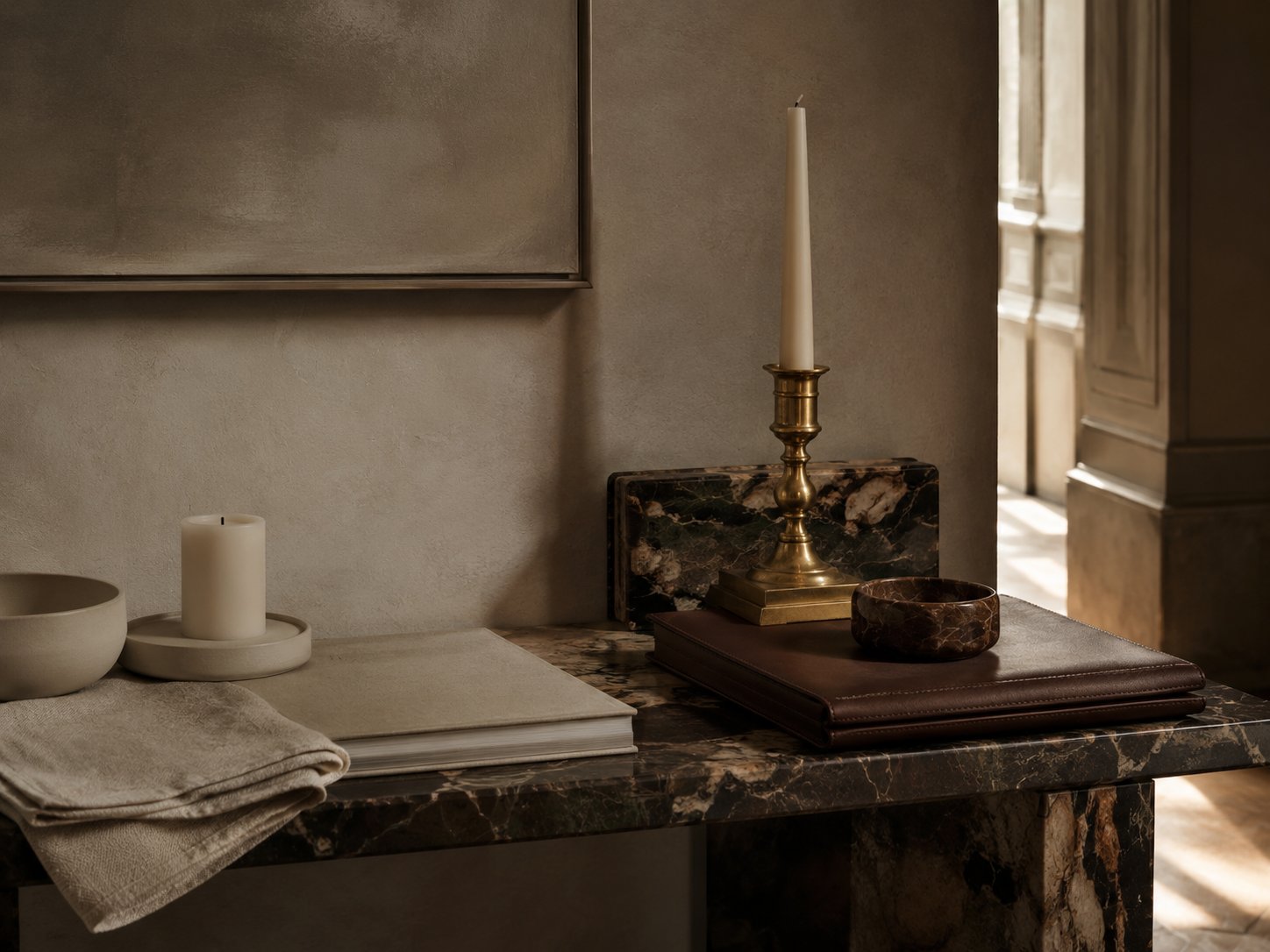
A solid brass object is honest about what it is. A piece of natural stone is honest about what it is. A timber surface that reveals its grain is honest about what it is. These materials possess a quality that cannot be manufactured through branding alone.
They age visibly. They reveal use. They develop character. The value of such materials often becomes more apparent over time because their qualities emerge gradually rather than immediately.
This principle of material honesty is something The Brass Store holds at the centre of every object it carries.
Price can attract attention. Materials sustain it.
Craftsmanship and the Question of Time
Craftsmanship introduces another dimension that price alone cannot explain. A handmade object contains decisions, judgements, corrections, and experience. These qualities are difficult to quantify, yet they often determine whether an object feels meaningful to live with.
A hand-forged hinge, a carefully stitched leather item, or a piece of furniture made by a skilled cabinetmaker may never become fashionable. That is precisely the point. They are not designed around novelty. They are designed around use.
Their value comes from how they perform over time rather than how they appear on the day they are purchased. This relationship with time is one of the defining characteristics of luxury.
The Objects We Keep
Consider the objects people keep for decades. A favourite chair. A fountain pen. A dining table passed from one generation to another. A cast-iron pan that improves with use.
These objects rarely remain important because they were expensive. They remain important because they continue to serve a purpose. Their value deepens through familiarity. They become woven into daily life.
The luxury is not that they were costly. The luxury is that they endured.
In a culture increasingly organised around replacement, endurance has become a form of rarity. And rarity, as we explored in our previous essay, sits at the heart of luxury itself.
The Problem With Price as a Shortcut
Price offers a shortcut. It allows us to make quick assumptions about quality. Sometimes those assumptions are correct. Often they are not.
The more useful question is not: “How much does this cost?” The more useful question is: “What qualities justify its existence?”
Does it improve with age? Is it made from honest materials? Was it crafted with care? Will it remain useful in ten years? Will it remain desirable in thirty?
These questions reveal more about luxury than any price tag ever could.
What Luxury Really Asks Of Us
Luxury asks us to slow down. To look more carefully. To judge objects by their qualities rather than their marketing. To value permanence over novelty. To appreciate materials that age honestly. To recognise craftsmanship even when it is quiet.
None of this guarantees that a luxurious object will be inexpensive. Many luxury objects are expensive. Some are extraordinarily expensive. But their luxury does not come from their price. Their price is merely one consequence of qualities that already existed.
Price is what we pay. Luxury is what remains. And what remains is almost always more important.
Continue Reading
01 What Is Luxury? A Radical Definition
02 Expensive Is Not Luxury
03 The Permanence of Natural Materials
Presented by The Brass Store