
The modern conversation around luxury often begins in the wrong place. Most discussions of luxury begin with price. That may be where the confusion starts. A luxury handbag. An expensive watch. A penthouse apartment overlooking a city skyline. We tend to assume that luxury can be measured in numbers. If something costs enough, it becomes luxury.
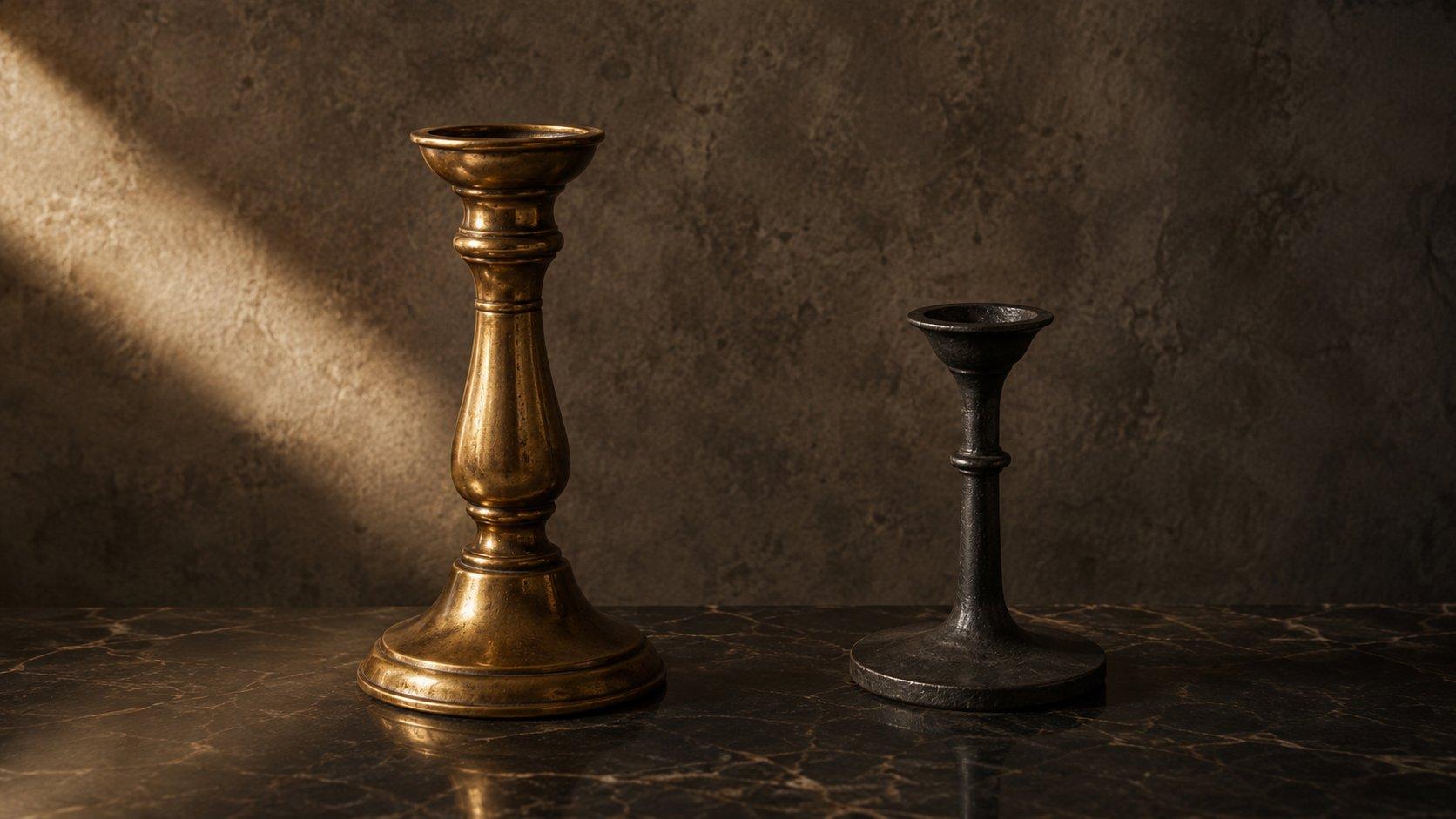
Yet that explanation feels incomplete. A beautiful brass vase in every home is simply a vase. The same brass vase in one home, while everyone else owns plastic, becomes something else entirely. The object has not changed. Its rarity has.
Luxury does not exist on its own. It exists in comparison. This leads us to an uncomfortable but important observation: luxury requires scarcity. When everyone can own something, it ceases to feel luxurious. Luxury emerges when an object, material, skill, or experience remains uncommon enough that access to it is limited.
This is not a flaw in the idea of luxury. It is the foundation of it.
Luxury has always been tied to rarity. Roman patrons commissioned marble from distant quarries. Venetian merchants prized glassmaking techniques unavailable elsewhere. Persian carpets required years of skilled labour. Japanese lacquerware demanded patience that industrial production could never replicate.
Across cultures and centuries, luxury has rarely been defined by price alone. Price was often the consequence. The deeper common factor was that these objects were difficult to obtain, difficult to create, or difficult to replace. The forms changed. The principle remained.
How Rarity Is Created
There are three primary mechanisms through which scarcity, and therefore luxury, are created.
Economic Scarcity
The most familiar form of scarcity comes through price. A £20,000 handbag is uncommon because most people cannot afford it. Price acts as a gatekeeper.
This is also the weakest form of scarcity. A product that is rare only because it is expensive becomes vulnerable the moment the price changes. The exclusivity was never embedded in the object itself. It existed in the barrier surrounding it.
Luxury built solely on price often struggles to survive changing tastes and changing markets.
Production Scarcity
Some things are rare because they are difficult to make. A handcrafted hinge requires time. A cabinetmaker can only build so many pieces in a year. A metalworker can only forge a limited number of objects in a lifetime.
Production itself becomes the constraint. Unlike price, this form of scarcity cannot be created overnight. It is tied to skill, labour, and the finite number of hours available to a craftsperson.
This is one reason craftsmanship remains closely associated with luxury. Not because handmade is always superior, but because genuine craft is inherently limited.
Material Scarcity
Certain materials are scarce by nature. A particular marble quarry may eventually be exhausted. Old-growth timber cannot be replaced quickly. Natural materials that require decades, centuries, or even geological timescales to form are limited by reality itself.
This is perhaps the most transparent form of scarcity. The material tells the story. Its rarity is not manufactured. It simply exists.
Real Luxury Uses More Than One Form of Scarcity
The strongest luxury objects are rarely scarce for only one reason. A handcrafted object made from exceptional materials will usually require time, skill, and cost. Its rarity is reinforced from multiple directions. Even if one source of scarcity weakens, the others remain.
This is one reason certain objects continue to feel valuable decades after they were made. Their rarity is rooted in reality rather than marketing.
What Luxury Actually Is
Luxury is best understood as access to what is genuinely rare. Sometimes that rarity comes from material. Sometimes from craftsmanship. Sometimes from time. The important point is that luxury depends upon constraints that cannot be easily replicated.
Scarcity alone, however, is not enough. A limited-edition product may be rare and still lack significance. A luxury object earns its place when rarity is combined with quality, usefulness, beauty, or meaning.
Luxury is not merely the absence of availability. It is the presence of value that cannot be easily reproduced.
The Scarcity of Permanence
This is where the conversation becomes more interesting. Permanence itself is rare. Most objects today are designed for replacement. They wear out, become unfashionable, or are discarded long before they reach old age.
Objects that endure are increasingly uncommon. An object that survives decades is rare. An object that becomes more beautiful through use is rarer still.
Brass develops patina. Leather softens. Wood gains character. Stone becomes polished by touch. These materials do not resist time. They record it.
Their value grows not because they remain unchanged, but because they age honestly. The same principle applies to craftsmanship. Real craftsmanship is scarce because it requires years to acquire. Skill cannot be rushed. Judgement cannot be automated. Experience cannot be mass-produced.
Material honesty is also becoming uncommon. Much of the modern world is built around imitation. Plastic imitates wood. Veneers imitate solid timber. Plating imitates solid metal. Objects that refuse to disguise what they are have become increasingly rare.
Restraint in design is equally scarce. We have grown accustomed to excess. More detail. More decoration. More evidence of expense. Yet the most enduring objects are often the quietest. They rely on proportion rather than spectacle. They trust materials rather than decoration. They are designed to remain relevant long after trends have disappeared.
Why This Matters Today
The modern market has become remarkably good at manufacturing the appearance of rarity. Limited editions. Artificial shortages. Constant collaborations. Endless claims of exclusivity. Yet these forms of scarcity often disappear as quickly as they arrive.
The moment people discover that exclusivity was manufactured, its value begins to fade. Real scarcity behaves differently. It grows stronger with time. An object that survives decades becomes rarer. A craft that fewer people can practise becomes rarer. A material that reveals its age honestly becomes rarer.
The objects that endure are rarely designed around novelty. They are designed around use. A hand-forged hinge may never appear in a museum. A brass door handle may never be photographed for a magazine. Yet both can remain in service for generations.
This is a different kind of luxury. Not luxury as display. Luxury as longevity.
The finest objects often disappear into daily life. They become trusted rather than noticed. Their value comes not from attracting attention but from continuing to perform beautifully year after year.
That kind of endurance is increasingly rare.
The Choice
Perhaps the most important question is no longer: “How much does this cost?” Perhaps it is: “Why is this rare?” And beyond that: “Will it still deserve my attention thirty years from now?”
These are different questions. They move the conversation away from status and toward substance. Away from novelty and toward permanence.
Scarcity may create luxury. Permanence proves it.
The relationship between permanence, time, and meaning is explored directly in The Psychology of Permanence.
Permanence Journal is presented by The Brass Store, a quiet extension of this interest in materials, craft, and objects that last.
Continue Reading
Why Brass Ages Better Than Trends
Why Handmade Still Matters
Presented by The Brass Store