
A brass door hinge installed in 1950 does not look the same today as it did when it was new. The surface has darkened. The edges have softened. The areas touched most often have become smoother than the parts left alone. If you run your hand across it, you feel more than metal. You feel decades of contact.
This is not decay. It is development.
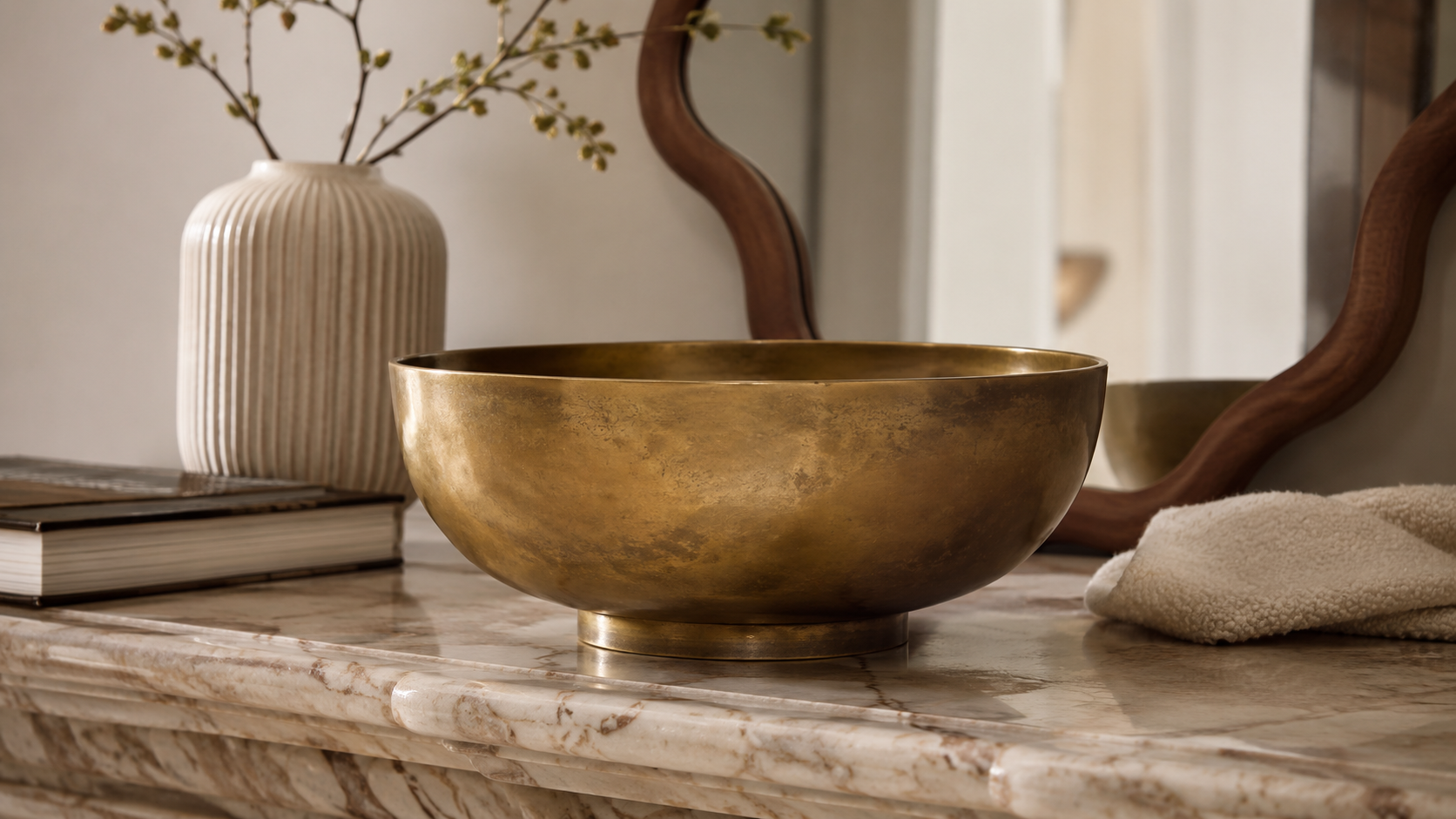
Brass has a particular relationship with time. New brass can be bright, almost yellow. With exposure, it begins to darken. The surface deepens into warmer golds, browns, and bronze-like tones. Over years, it may develop patina, a surface character shaped by air, touch, moisture, cleaning, neglect, and use.
The important thing is that this change belongs to the material. It is not a disguise falling away. It is not a coating failing. It is the brass continuing to become itself.
This is why brass deserves attention in any serious conversation about permanence. It does not remain valuable because it stays new. It remains valuable because it knows how to age.
The Difference Between a Trend and a Material
A trend belongs to a moment. It arrives with energy, becomes visible, spreads quickly, and then begins to lose the freshness that made it desirable. This does not make trends meaningless. Trends can reveal the mood of a period. They can be exciting, expressive, and culturally useful.
But trends rarely offer permanence because their value depends heavily on novelty.
A material works differently. Wood, stone, leather, linen, bronze, iron, and brass may move in and out of fashion, but their value is not created entirely by fashion. They existed before the trend cycle noticed them, and they often remain after the trend cycle has moved elsewhere.
This is the difference between an image and a substance. A trend must keep proving that it belongs to the present. A material does not have to do this. A material can belong to time itself.
Brass survives because it is not only a colour, a finish, or a decorative accent. It is a real material with weight, temperature, surface, memory, and use.
How Trends Age
Design trends age through recognition. A form, colour, finish, or style begins to feel attached to a certain decade. What once appeared fresh begins to read as belonging to a specific moment.
This happens even when the object is still physically intact. A chair may not be broken. A lamp may still work. A room may still be clean and functional. Yet the design language can begin to feel dated because the visual code has moved on.
This is one of the weaknesses of trend-based design. Its ageing is not always physical. Often, it is cultural.
The object does not fail because it stops functioning. It fails because the meaning around it changes.
A trend asks to be seen as current. Once it is no longer current, it loses much of its power. That is why trend-led objects often have a shorter life than their materials would suggest. They are replaced not because they cannot be used, but because they no longer feel desirable.
Brass ages differently. It does not depend entirely on cultural freshness. It develops through contact, use, and time. Its ageing is physical before it is fashionable.
How Brass Ages
Brass changes because it is alive to its environment. It reacts to air, moisture, oils from the hand, cleaning habits, and the conditions of the room. This makes every brass object slightly different over time.
A brass handle on a frequently used door will not age like a brass lamp in a quiet corner. A brass rail in a hotel lobby will not age like a brass object kept inside a private study. A piece exposed to humid air will develop differently from one in a dry interior.
This makes brass personal. Its surface becomes a record of where it has been and how it has been used.
The areas touched daily may become polished. Recessed areas may darken. Edges may catch light differently from flat surfaces. The object becomes less uniform, but more specific.
This is one of the quiet beauties of brass. It does not remain anonymous. It gathers identity.
Patina Is Not Failure
Modern products often treat ageing as a problem. The ideal object is expected to remain flawless, untouched, and almost frozen. A scratch becomes damage. A mark becomes failure. A change in colour becomes a defect.
But many traditional materials do not behave according to this idea. They were never meant to remain untouched. They were meant to enter life.
Patina is part of this older understanding of value. It is not simply dirt, neglect, or deterioration. It is the visible result of time meeting material. In brass, patina can give depth, warmth, and individuality to an object. It can make the surface more complex than it was when new.
This is very different from the failure of an imitation surface. When a coating peels, it exposes weakness. When plating wears through badly, it may reveal the distance between appearance and substance. When plastic scratches, the scratch often remains only damage.
Brass can mark, darken, and change without losing itself.
That is the difference.
Why Brass Feels Permanent
Part of the power of brass is physical. It has weight. A solid brass handle feels different in the hand from a light imitation. It carries a kind of density that the body recognises before the mind explains it.
This matters in interiors because luxury is not experienced only through sight. It is experienced through touch, sound, resistance, temperature, and use. A door handle, a drawer pull, a lamp base, or a railing becomes part of the daily choreography of a space.
Brass belongs naturally to these moments of contact. It is not only looked at. It is held.
That is why brass often appears in places where the hand meets architecture: handles, knobs, hinges, rails, locks, latches, and hardware. These are small details, but they shape the way a room feels. They can make an ordinary action feel considered.
A trend may decorate a space. Brass can deepen the experience of using it.
Brass and Restraint
Brass is powerful, which means it must be used carefully. Too much brass can easily become theatrical. It can make a room feel staged, shiny, or over-designed.
The strongest use of brass is often restrained. A handle. A hinge. A lamp. A rail. A small edge. A detail that catches light and touch without demanding control of the entire room.
This is where brass connects to true quiet luxury. In an earlier essay, we explored the difference between quietness as a style and quietness as a philosophy. Brass can belong to both, but it is most convincing when used with discipline.
A brass object should not be added simply because brass appears expensive. It should appear where the material has a reason to exist. Where it will be touched. Where it will catch light. Where it will age. Where it can earn its place over time.
The finest interiors understand this. They do not use brass to shout luxury. They use it to create warmth, continuity, and depth.
Brass and Material Honesty
Brass also belongs to the larger question of material honesty. A solid brass object is honest because its value does not exist only on the surface. The material continues through the object. It can be polished, darkened, repaired, restored, or allowed to age naturally.
This is different from an object that only borrows the appearance of brass. A brass-coloured surface may create a similar first impression, but it does not necessarily carry the same weight, repairability, or ageing process.
The distinction matters because permanence depends on what happens after the first impression. A material that is honest can continue to reveal itself. A material that depends only on appearance may struggle once that appearance begins to change.
This is not a simple argument against plating or finishes. Many techniques have legitimate uses. The point is more precise: if an object is meant to express permanence, the relationship between surface and substance becomes important.
Brass works because its surface and substance can belong to the same story.
Why Designers Return to Brass
Designers return to brass because it can hold many moods without losing its identity. It can feel classical, modern, industrial, ceremonial, domestic, or luxurious depending on how it is shaped and placed.
In a hotel lobby, brass can bring warmth to stone and glass. In a private home, it can soften timber and plaster. In lighting, it can respond beautifully to glow and shadow. In hardware, it can make small functional details feel intentional.
This range is one reason brass does not disappear. It adapts without becoming empty.
A fashionable colour may be tied to one season. A fashionable shape may be tied to one decade. Brass, however, can move through many design languages because its value is not limited to one style.
It belongs to use before it belongs to fashion.
Trends Fade Because They Depend on Novelty
A trend needs novelty to remain alive. Once it becomes familiar, it begins to weaken. This is not a flaw. It is simply how trends work.
A trend says: look at me now.
Brass says something different. It says: use me, and I will change with you.
This difference is important because novelty and permanence ask different things from an object. Novelty asks an object to impress quickly. Permanence asks it to remain meaningful slowly.
Many trend-led objects are designed for the moment of attention: the photograph, the launch, the showroom, the first impression. Brass belongs to a slower rhythm. It rewards long contact. It becomes more interesting when it is allowed to remain.
A trend becomes old when time passes. Brass becomes richer.
The Beauty of Use
The most beautiful brass objects are often not the most perfect ones. They are the ones that have been used.
A polished patch around a door handle. A darker line near a hinge. A lamp base with a softened edge. A rail touched by hundreds of hands. These details do not reduce the value of the object. They give it presence.
This kind of beauty cannot be manufactured instantly. It must be earned. It requires use, patience, and time.
That is why aged brass often feels more convincing than artificially perfect brass. It suggests continuity. It suggests that the object has remained in place long enough to gather life.
In a culture that replaces things quickly, an object that shows long use begins to feel rare.
And rarity, as we explored in What Is Luxury? A Radical Definition, is central to luxury.
Designing for Now, Designing for Time
There is nothing wrong with designing for the present. Every age needs its own language. Every generation creates forms that belong to its moment.
But some objects are designed only for now, while others are designed to survive now.
That distinction matters.
An object designed only for the present may lose its force when the present changes. An object designed for time can absorb change. It can age, repair, adapt, and remain useful.
Brass is one of the materials that supports this longer view. It does not promise eternal perfection. It promises continuity. It allows the designer and the owner to think beyond first impressions.
This is why brass belongs so naturally to the philosophy of Permanence Journal. It shows that lasting beauty does not come from refusing time. It comes from entering into a better relationship with it.
Why Brass Ages Better Than Trends
Brass ages better than trends because it does not depend entirely on being new. It has qualities that continue after novelty fades: weight, warmth, touch, repairability, patina, and material honesty.
A trend belongs to a season. Brass belongs to rooms, buildings, hands, rituals, and years of contact.
A trend loses power when repeated. Brass gathers power when used well.
A trend often becomes embarrassed by age. Brass can be enriched by it.
This is the deeper lesson. Permanence is not the same as remaining unchanged. A material can change and still endure. It can darken and still become more beautiful. It can show use and still gain value. It can age without losing dignity.
The best brass objects do not simply survive time.
They become themselves through it.
The psychological dimension of this is explored in The Psychology of Permanence.
Presented by The Brass Store
Leave a Reply